The best chef knives balance blade length, handle feel, edge style, and care needs for the way you cook. These picks include everyday all-rounders alongside shorter blades, distinctive profiles, and options with protective sheaths.
Quick Top Products
imarku Japanese Chef Knife 8 Inch
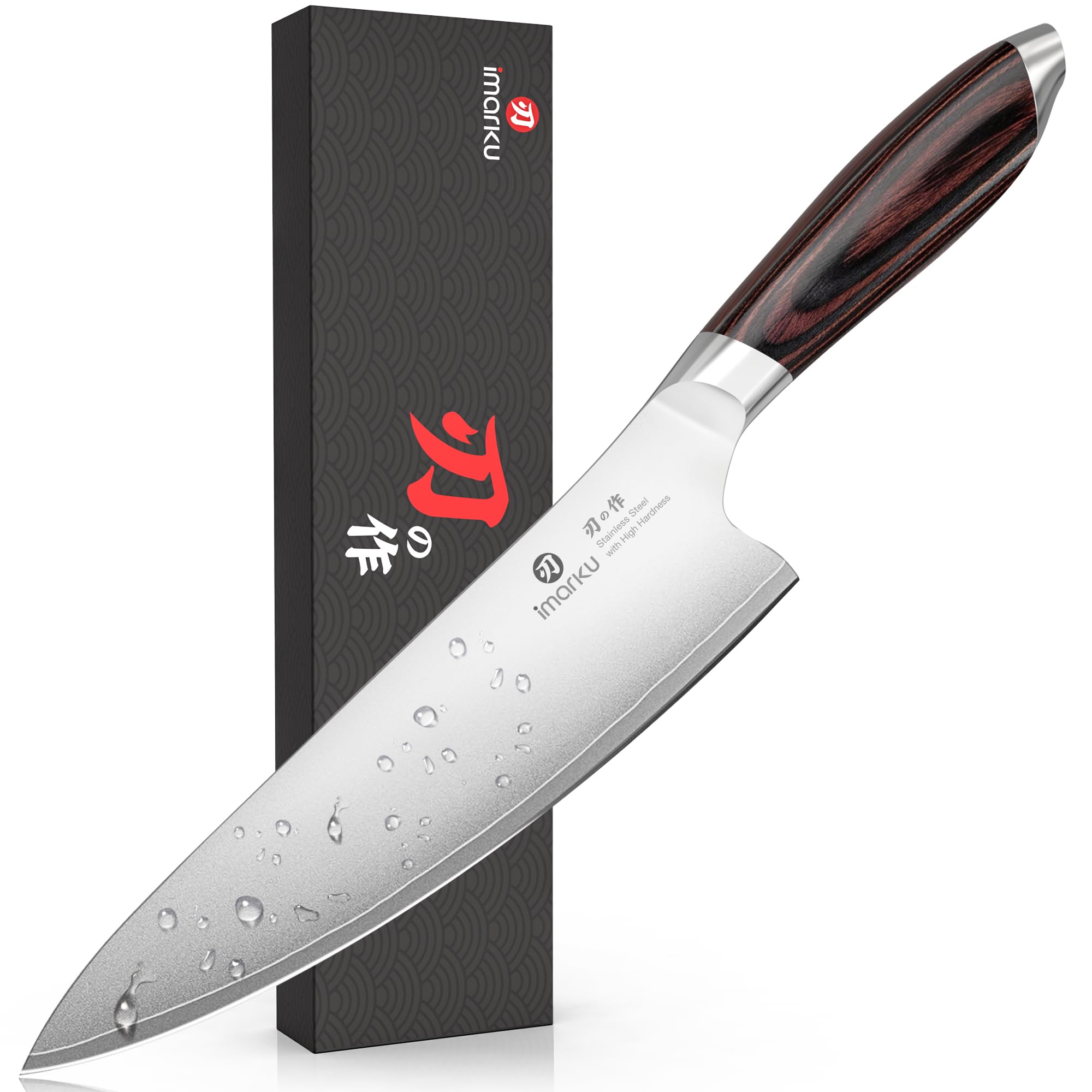
- An 8-inch, triple-layer clad blade has a double-bevel edge.
- At 210g, its pakkawood handle is aimed at smaller hands or lighter handling.
- The maker excludes bones, frozen food, and hard squash rinds.
Best For: Home cooks who want a lighter full-size knife and do not need to cut bones or frozen food.

Messermeister Meridian Elite 8-Inch
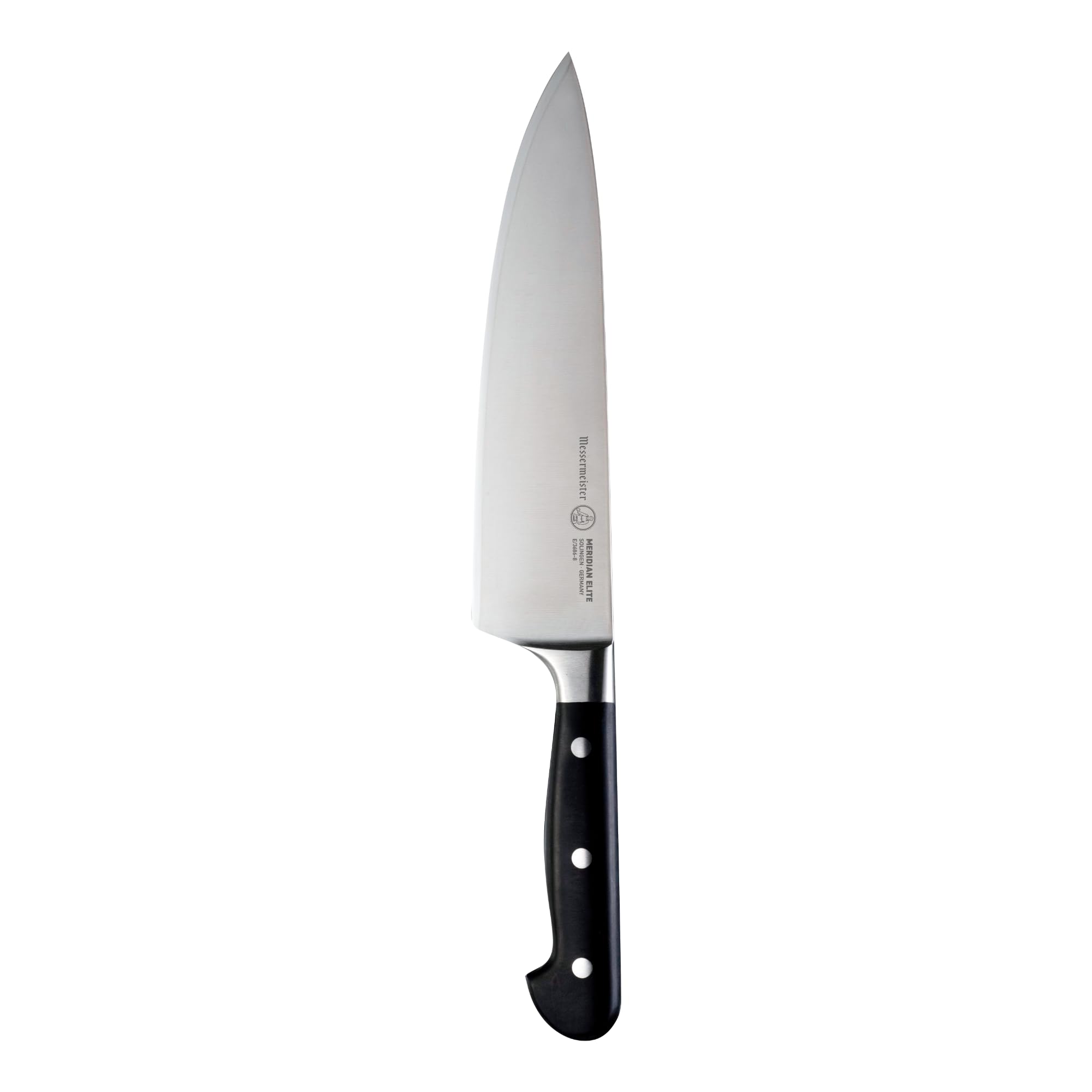
- The forged knife has a triple-rivet, full-exposed tang and POM handle.
- The 8-inch model is described as heavy with balance in the handle.
- Its bolsterless heel supports use of the blade through the heel.
Best For: Cooks who prefer a heavier, full-size forged knife for routine vegetable and meat prep.
Messermeister Oliva Elite Stealth 8-Inch
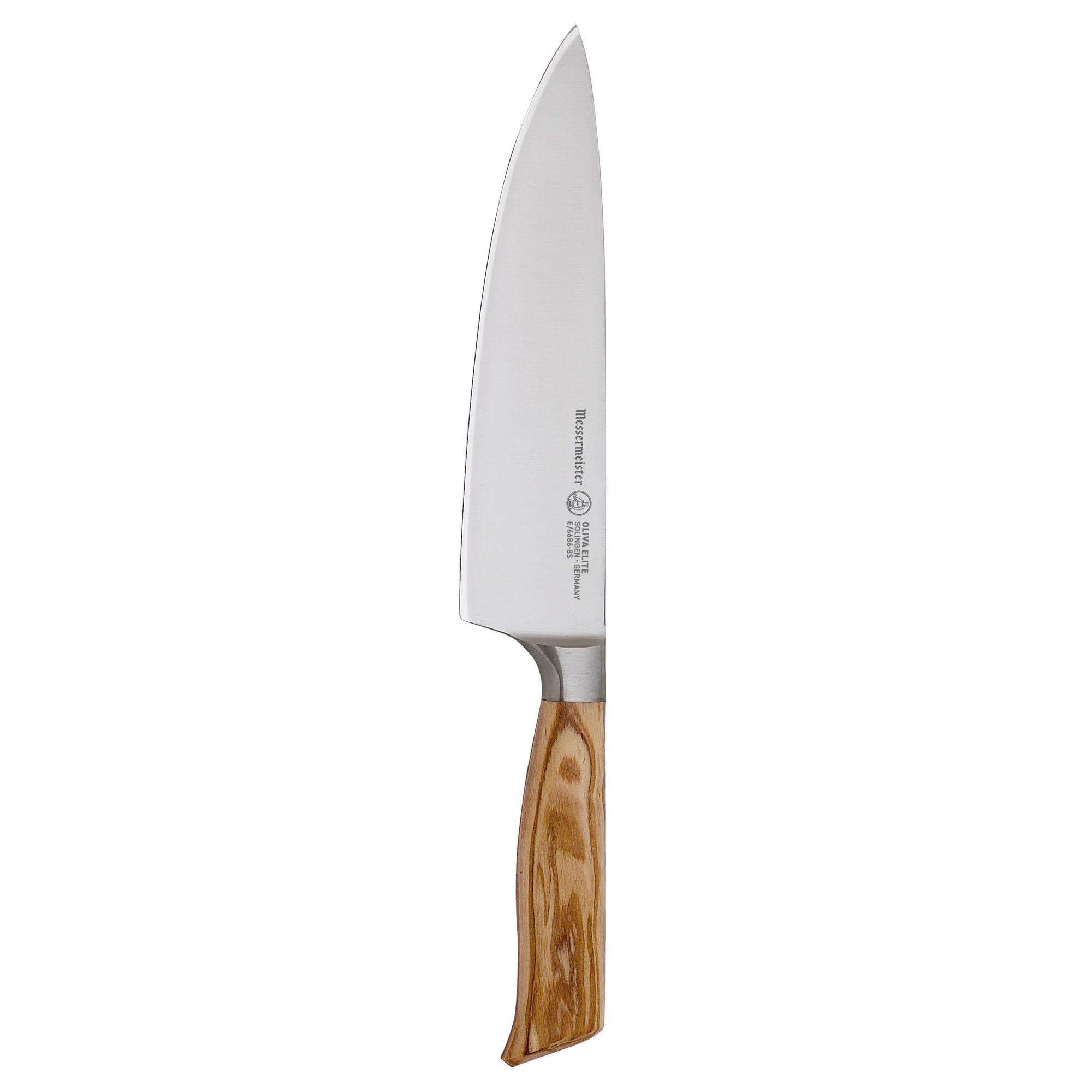
- The 8-inch knife is about 25% thinner and 10% lighter than its traditional counterpart.
- It has a natural Mediterranean olive wood handle.
- The bolsterless heel uses the blade from heel to tip.
Best For: Cooks who want an 8-inch chef’s knife with an olive wood handle and a thinner, lighter profile.
KEEMAKE 8-Inch Chef Knife
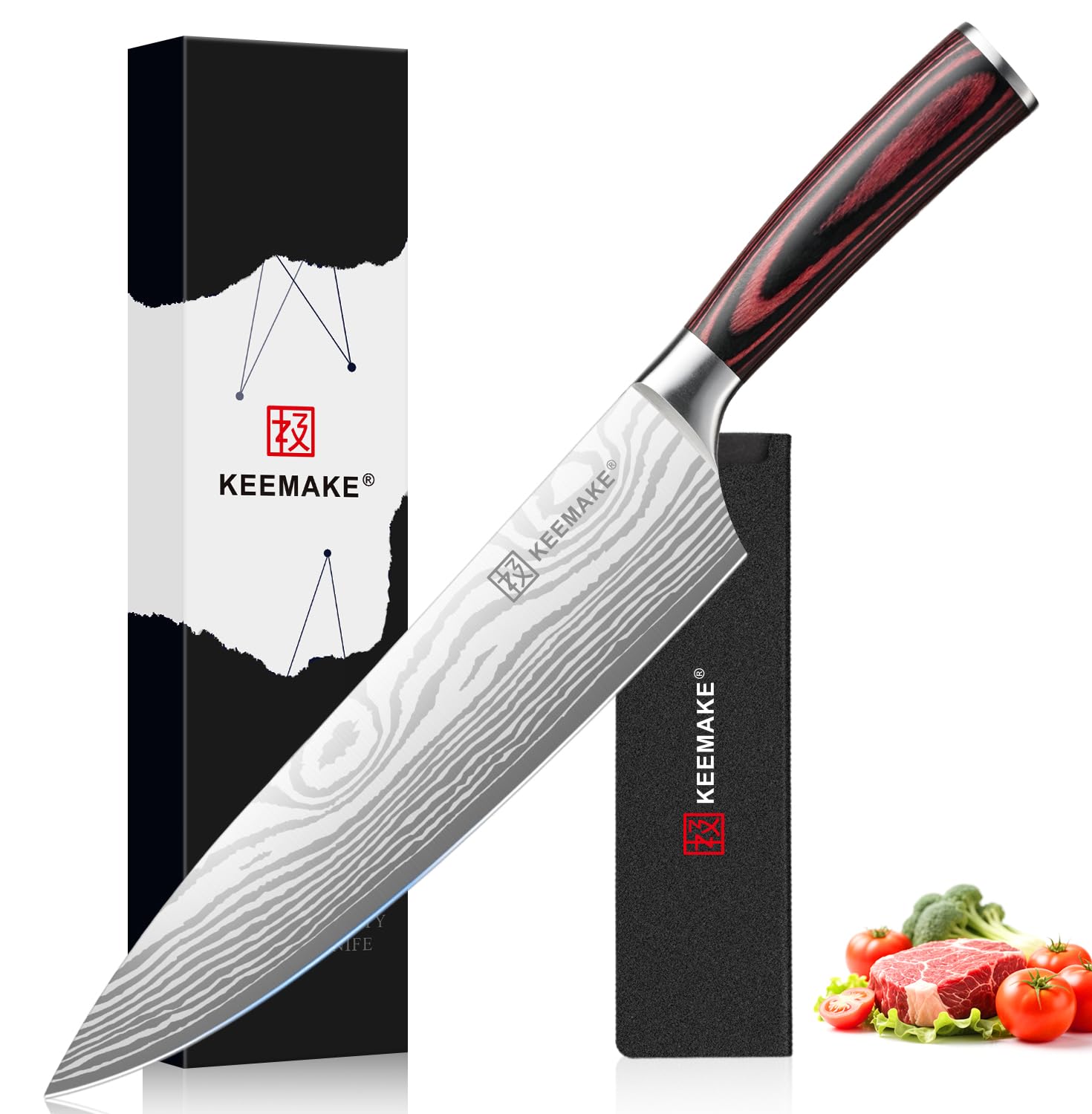
- The forged stainless blade is 1.4116 steel with 58±2 HRC hardness.
- Its hand-sharpened edge is 8°–12° on each side.
- A gift box and protective sheath are included.
Best For: Home cooks seeking an 8-inch forged knife with a protective sheath for storage.
imarku 8-Inch Hammered Japanese Chef Knife
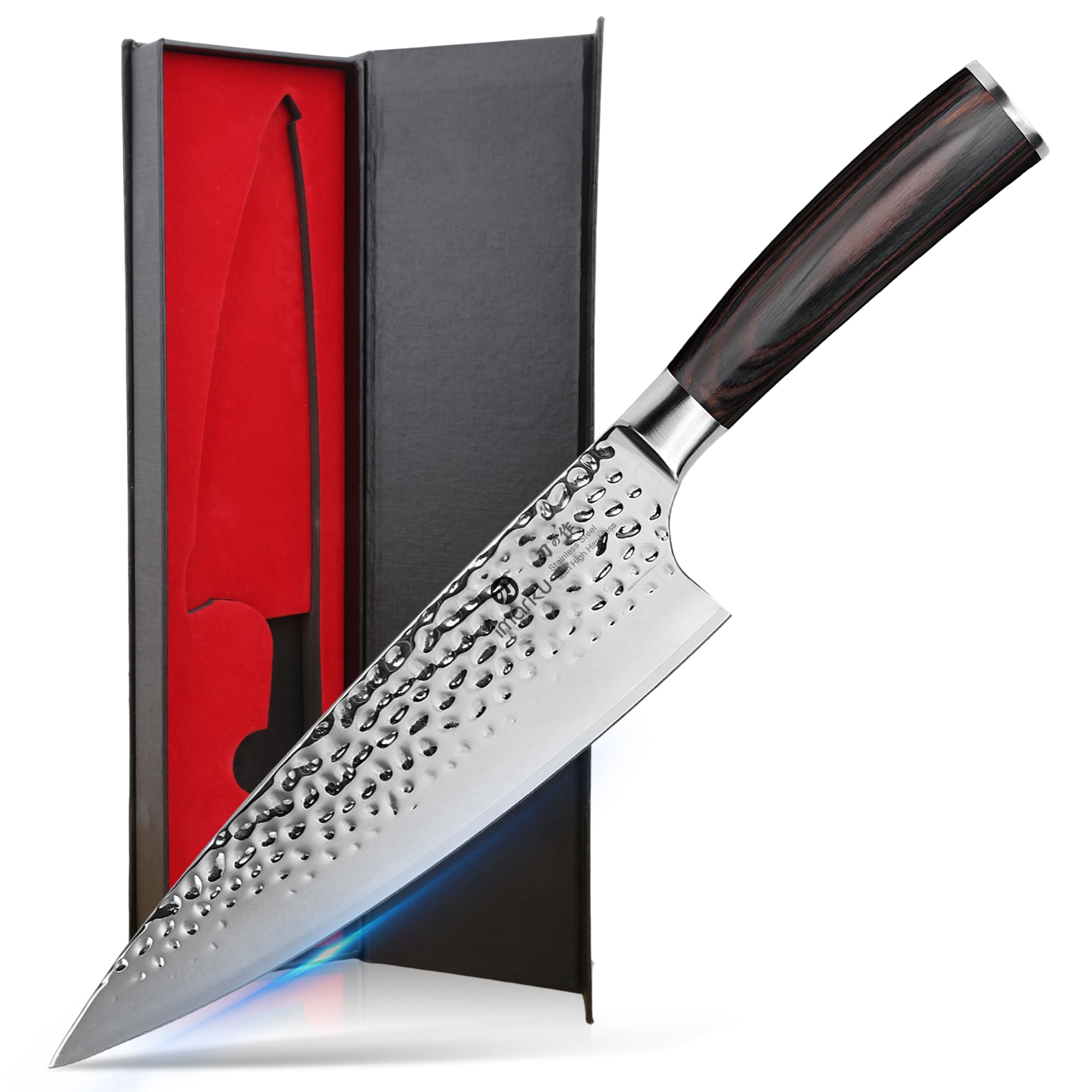
- The 8-inch blade combines high-carbon stainless steel and a powder steel edge.
- Its V-shaped edge is hand-sharpened to 13° per side.
- The hammered finish is designed to reduce food adhesion.
Best For: Cooks who want an 8-inch knife with a hammered finish and a Pakkawood handle.
8-Inch Damascus Chef Knife With Sheath
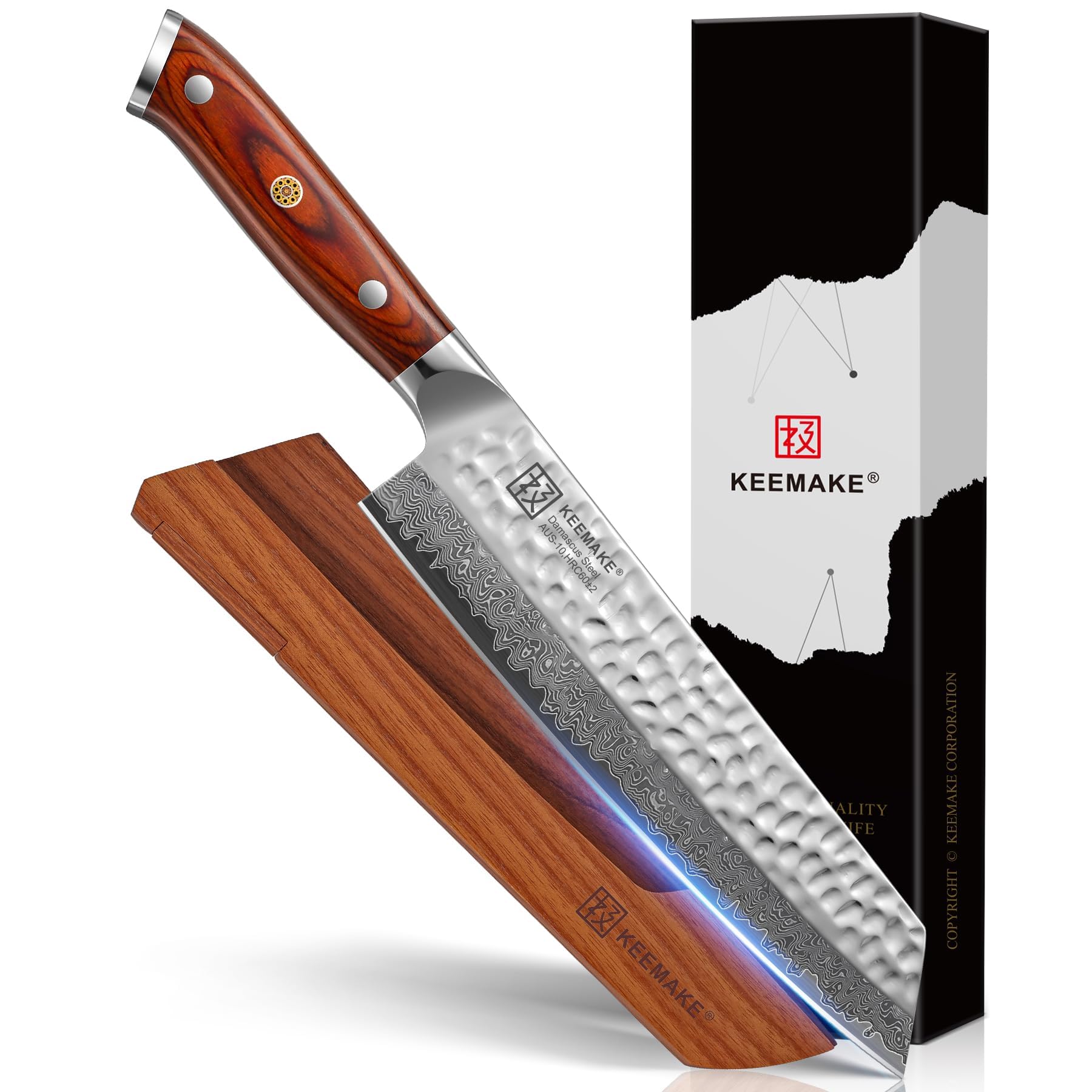
- The blade has a VG10 core and 67-layer Damascus construction.
- Its 10° edge is paired with a Pakkawood handle and full-tang build.
- The ash wood sheath is freestanding for countertop storage.
Best For: Home cooks who want a Damascus-style 8-inch blade and a countertop-standing wooden sheath.
Sunnecko 8-Inch Damascus Chef Knife
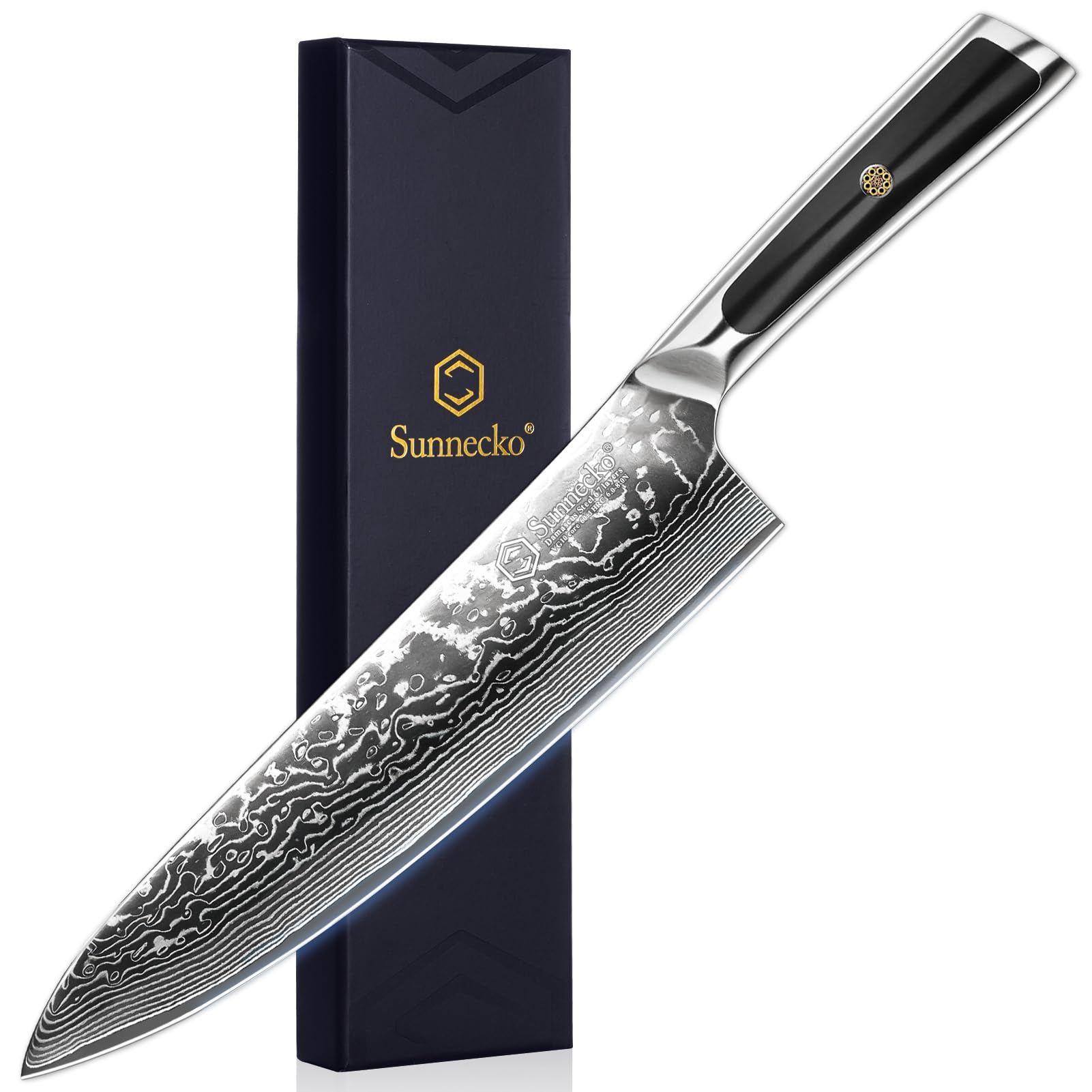
- The 8-inch blade uses a VG10 core and 67 layers of Damascus steel.
- The edge is hand-honed to 10–12 degrees per side.
- The knife has full-tang construction and an ABS handle.
Best For: Cooks who want a full-size Damascus knife for indoor prep and occasional outdoor cooking.
SYOKAMI 8.2-Inch Kiritsuke Chef Knife
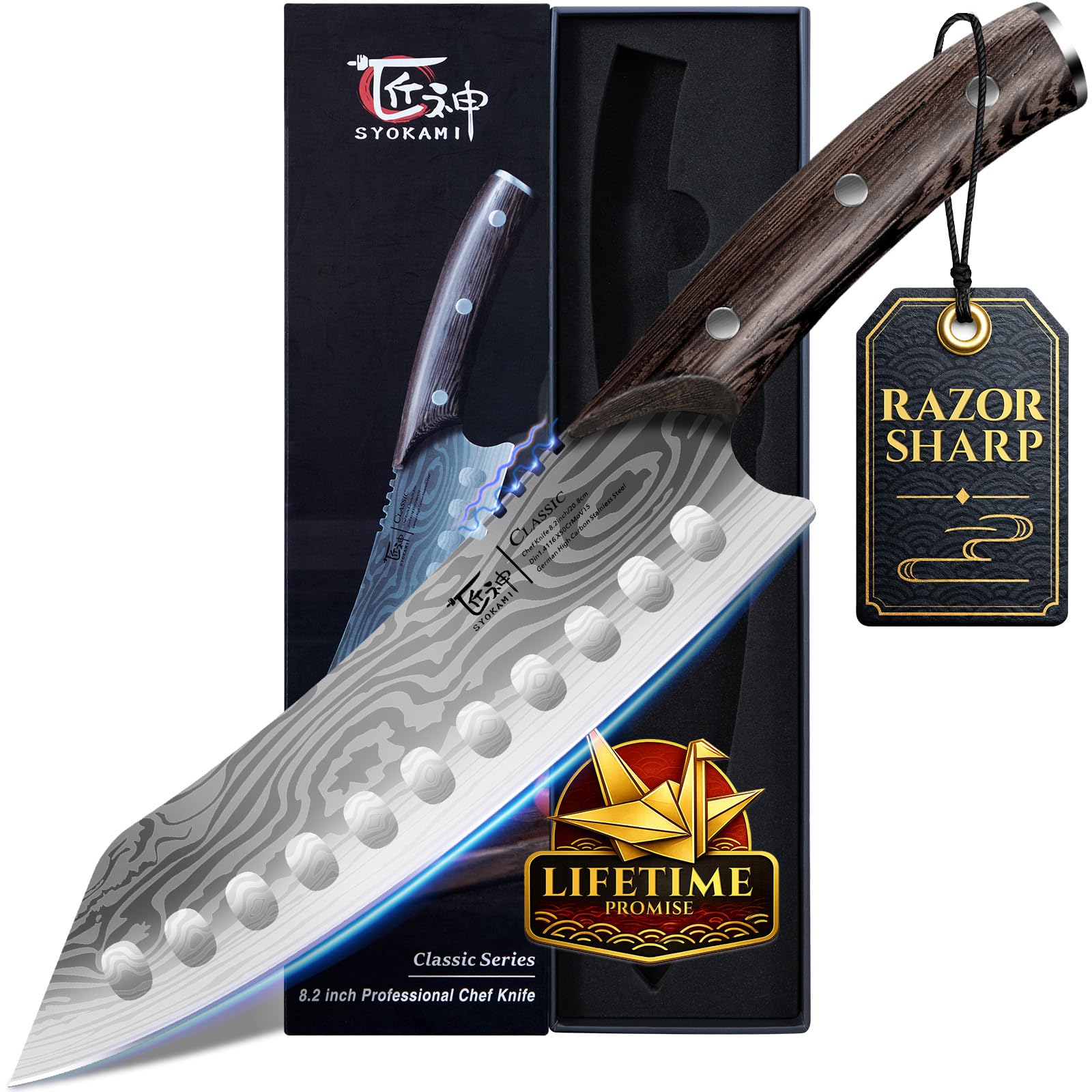
- The title identifies an 8.2-inch chef knife with a kiritsuke profile.
- It has a guarded grip, full tang, and triple-riveted wenge handle.
- The hand-polished edge is 14–16 degrees per side.
Best For: Cooks seeking a pointed kiritsuke shape with a hand guard and textured wood handle.
SYOKAMI 7-Inch Cleaver Chef Knife
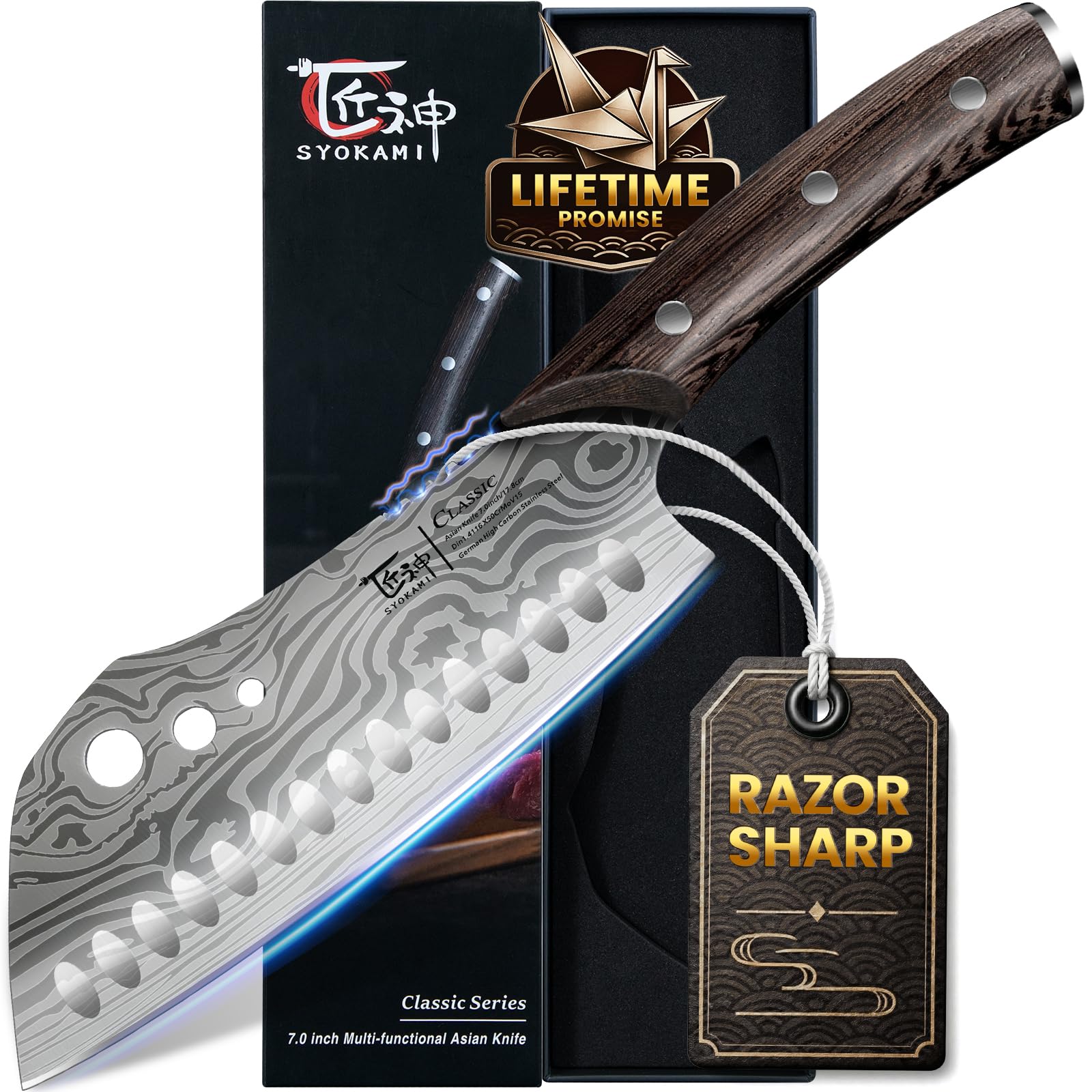
- The 7-inch profile combines Chinese chef’s knife, santoku, and nakiri characteristics.
- Three blade holes act as an herb stripper.
- Its full-tang German steel blade has a 14–16-degree edge.
Best For: Cooks who regularly strip herbs and want a compact Asian-style multipurpose blade.
Messermeister Oliva Elite Stealth 9-Inch
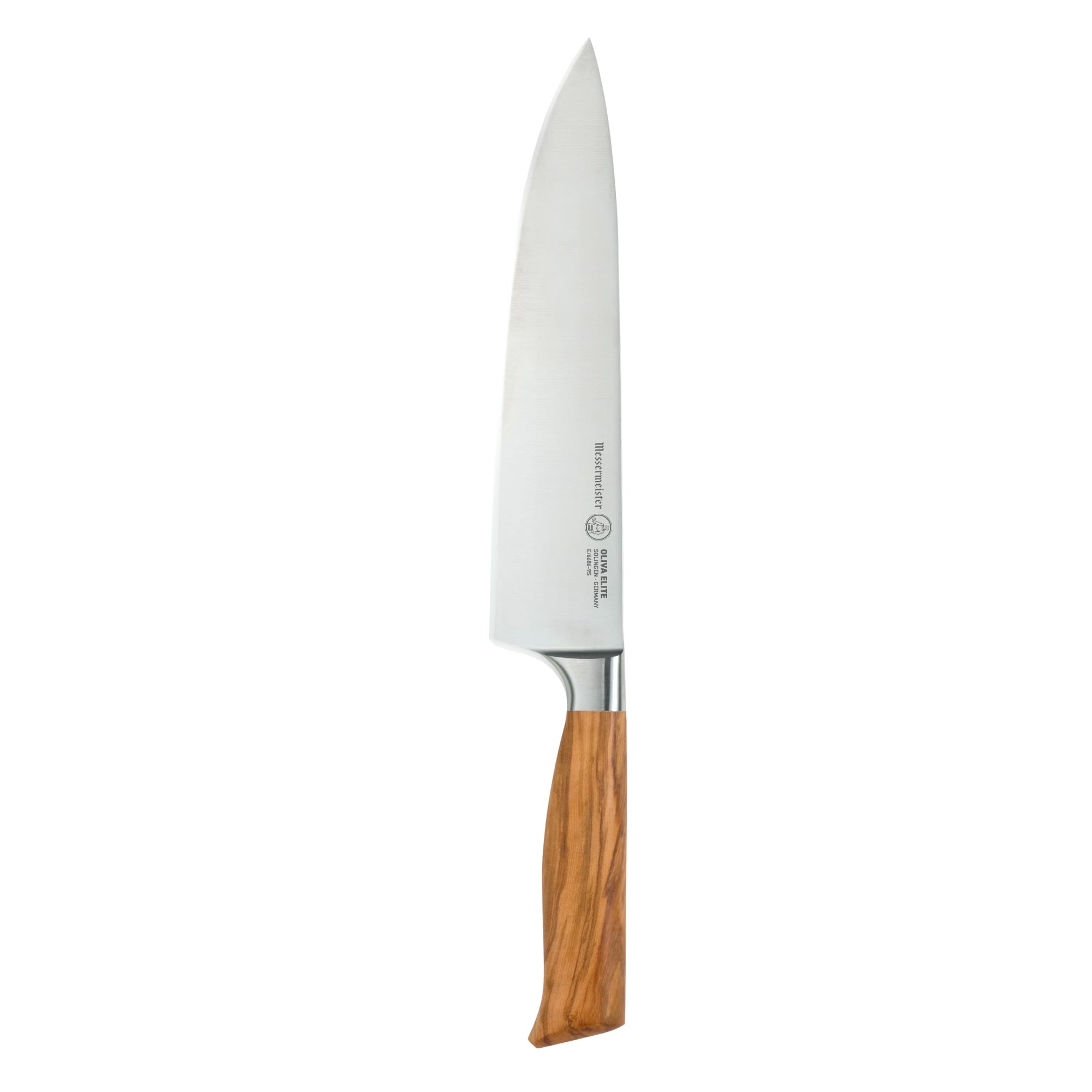
- The 9-inch knife is about 25% thinner and 10% lighter than the traditional model.
- It has a natural Mediterranean olive wood handle and forged one-piece build.
- The bolsterless heel makes the blade usable heel to tip.
Best For: Cooks who want a longer chef’s knife with a thinner, lighter build and natural olive wood handle.
Lightweight, Balanced Daily Prep
imarku Japanese Chef Knife 8 Inch, Sharp Kitchen Knife in Japanese HC Steel
This imarku has an 8-inch blade, a 12°±2° double-bevel edge, and a triple-layer clad construction. Its 210g weight and pakkawood handle suit cooks who find traditional chef knives too heavy.
A matte finish is designed to help fish, cheese, potatoes, and onions release from the blade. The knife covers slicing, dicing, mincing, and chopping, but the maker specifically rules out bones, frozen foods, and hard squash rinds.
Hand washing is recommended, so it suits cooks willing to care for a knife after use.
Best For: Home cooks who want a lighter full-size knife and do not need to cut bones or frozen food.
| Pros | Cons |
|---|---|
|
|
Choose this model if low weight is a priority and most of your prep involves vegetables, herbs, fish, and boneless meat. Its explicit exclusions matter: keep a different tool for bones, frozen items, and hard squash rinds.
The 8-inch blade offers a familiar full-size format, while the slim weight and matte surface distinguish it from heavier traditional options. Check that the pakkawood handle and hand-wash care fit your kitchen routine.
Traditional Heavier German-Style Feel
Messermeister Meridian Elite 8” Traditional Chef’s Knife - Fine German Steel Alloy Blade - Rust Resistant & Easy to Maintain
The Meridian Elite pairs an 8-inch chef’s knife format with a one-piece, hot-drop hammer-forged blade, bolster, and tang. Its triple-rivet POM handle gives it the traditional full-exposed-tang construction, and the product notes specifically call out its heavy weight and balance in the handle.
A 15-degree edge and German 1.4116 steel alloy are intended for fruit, vegetables, meat, and fish. The bolsterless heel also lets the cutting and sharpening surface extend through the heel.
Consider the heft before choosing it if you prefer a lighter knife.
Best For: Cooks who prefer a heavier, full-size forged knife for routine vegetable and meat prep.
| Pros | Cons |
|---|---|
|
|
Pick the Meridian Elite if you like a substantial knife and want the bolsterless heel to remain usable for honing and sharpening. The heft is the clearest tradeoff: cooks seeking lighter handling should consider an option with a documented lower weight instead.
Its 15-degree edge, forged build, and full tang fit a conventional chef-knife role for produce, meat, and fish. Confirm that the handle style and heavier feel suit your grip before buying.
Lighter Olive-Wood Handle
Messermeister Oliva Elite Stealth 8” Chef’s Knife - Fine German Steel Alloy Blade & Natural Mediterranean Olive Wood Handle - Rust Resistant & Easy to Maintain
This 8-inch Oliva Elite Stealth uses a one-piece blade, bolster, and tang hot-drop forged in Solingen, Germany. Its natural Mediterranean olive wood handle has an ergonomic shape, and the knife is about 25% thinner and 10% lighter than the brand’s traditional chef’s knife.
The 15-degree edge is intended for cutting, chopping, slicing, and dicing produce, meat, and fish. A bolsterless heel makes the full edge easier to use for cutting and sharpening.
It offers a lighter alternative within this maker’s line while preserving a full-size chef-knife format.
Best For: Cooks who want an 8-inch chef’s knife with an olive wood handle and a thinner, lighter profile.
| Pros | Cons |
|---|---|
|
|
Choose the Oliva Elite Stealth if you want a full-size knife with a thinner, lighter profile and a natural wood handle. The documented weight comparison is relative to the brand’s traditional chef’s knife, so it does not establish an absolute weight.
Its bolsterless heel is useful if you sharpen along the full blade. Compare the olive wood grip with synthetic handle options if material preference or simpler care is a priority.
Fine Edge With Sheath Included
KEEMAKE 8" Chef Knife, Ultra Sharp Kitchen Knife with Ergonomic Handle
KEEMAKE combines an 8-inch chef-knife format with 1.4116 high-carbon stainless steel, a 58±2 HRC hardness, and a hand-sharpened 8°–12° edge on each side. The curved Pakkawood handle and sloped bolster are shaped to support a pinch grip, and the product notes describe it as versatile for chopping, slicing, mincing, and light boning.
A gift box and protective sheath are included, which can help with drawer storage. The notes also extend its uses to partially frozen meat and crusty bread, but do not specify a blade weight or care instructions.
Best For: Home cooks seeking an 8-inch forged knife with a protective sheath for storage.
| Pros | Cons |
|---|---|
|
|
This KEEMAKE is a practical fit if you want a full-size knife that arrives with a sheath and supports a pinch grip. Its narrow edge-angle range and listed hardness give more detail than many basic options, though the record does not provide weight or care guidance.
Check how much heft you prefer and plan suitable cleaning and storage before buying. The use cases include light boning, so it is not presented as a dedicated cleaver.
Hammered Blade and Powder-Steel Edge
imarku 8 Inch Chef Knife, Hand-Hammered Japanese Kitchen Knife, High Carbon Steel Chef's Knife with Powder Steel Edge, Ultra Sharp Cooking Knife with Ergonomic Handle for Professional & Home Chefs
This imarku has an 8-inch high-carbon stainless steel blade with a powder steel edge and a hand-hammered finish. Its V-shaped edge is hand-sharpened to 13° per side, and the blade is 2.3mm thick.
The notes describe it for chopping, dicing, and slicing vegetables, fruit, and meats, while the hammered surface is intended to reduce food adhesion. A Pakkawood handle is shaped for both left- and right-handed users.
It arrives in a gift box. The product details emphasize its edge and finish, but do not specify whether a sheath or other storage protection is included.
Best For: Cooks who want an 8-inch knife with a hammered finish and a Pakkawood handle.
| Pros | Cons |
|---|---|
|
|
Choose this imarku if the hammered finish and stated 13-degree edge are central to your preference. Its 8-inch blade and two-handed suitability make it a conventional all-purpose format, while the Pakkawood handle sets it apart from synthetic-grip options.
Before purchase, check your storage plan because no protective cover is identified in the product details. The 2.3mm thickness is a specific blade measurement; no weight is provided for comparison.
Damascus Pattern With Upright Sheath
8 Inch Damascus Chef Knife, Japanese Kitchen Knife with VG10 Steel
This 8-inch Japanese chef knife uses a VG10 core and 67-layer Damascus steel, with a hammered blade and a 10° edge. Its Pakkawood handle has triple rivets and full-tang construction.
A fitted ash wood sheath covers the blade for storage and can stand upright on a countertop. The knife is described for slicing, dicing, and chopping vegetables, fruit, meat, and fish.
Its kiritsuke profile combines chef-knife versatility with a slicing-knife role, so buyers should be comfortable with that blade shape. The product details give both a 62 HRC core and 60±2 HRC hardness language; verify the exact specification if hardness is a deciding factor.
Best For: Home cooks who want a Damascus-style 8-inch blade and a countertop-standing wooden sheath.
| Pros | Cons |
|---|---|
|
|
Consider this knife if you value a distinctive blade pattern and want its sheath to double as an upright countertop holder. The kiritsuke profile brings a more pointed slicing character than a plain chef-knife shape, so check that it suits your preferred grip and cutting style.
The hardness figures in the supplied details are inconsistent, making confirmation sensible if steel hardness is a key criterion. Its 8-inch blade and included sheath are clearly identified.
Damascus VG10 Core and Full Tang
Sunnecko 8 Inch Japanese Damascus Chef Knife - Ultra Sharp VG10 Steel | 10-12 Degree Edge 67 Layers Kitchen Cooking Knives for Meat, Vegetable & Fruit, Full Tang, Camping & BBQ Gifts for Men
Sunnecko’s 8-inch chef knife has a VG10 vacuum-treated core, 67 layers of high-carbon stainless steel, and a full-tang construction. The edge is hand-honed to 10–12 degrees per side, and an ABS handle provides the grip surface.
The notes describe it for slicing, dicing, and chopping across ingredients from seafood to heavier cuts of protein. They also position it for backyard barbecue and campsite prep.
It arrives in a gift box. A sheath is not identified for this model, so consider how you will protect the edge if you plan to carry it outdoors or store it loose in a drawer.
Best For: Cooks who want a full-size Damascus knife for indoor prep and occasional outdoor cooking.
| Pros | Cons |
|---|---|
|
|
Choose the Sunnecko if a full-size blade with a VG10 core, Damascus layers, and an ABS handle appeals to you, especially for a knife that may travel between kitchen and barbecue. Its 10–12-degree edge is narrow, so weigh edge-angle preference when comparing.
No sheath is identified here; plan protected storage before taking it to a campsite. The product notes do not specify the knife’s weight.
Guarded Kiritsuke Profile
SYOKAMI Japanese Kitchen Knife, 8.2 Inch Chef Knife, Carbon Steel Kiritsuke, Razor Sharp Santoku for Precision Cutting, Damascus Pattern, Full Tang Wood Handle, Housewarming Cooking Gifts
The SYOKAMI measures 8.2 inches in the title and uses a kiritsuke profile with a guarded grip between blade and handle. Its full-tang, single-piece precision-forged construction pairs imported high-carbon German steel with a triple-riveted wenge handle.
The hand-polished edge is 14–16 degrees per side, and the product notes give a 56+ Rockwell hardness rating. The guard is designed to help keep the hand from sliding toward the blade, and the grip is intended to remain stable when wet.
This option suits buyers drawn to its distinctive profile and grip details; care instructions are not specified.
Best For: Cooks seeking a pointed kiritsuke shape with a hand guard and textured wood handle.
| Pros | Cons |
|---|---|
|
|
This SYOKAMI is a fit if you want a kiritsuke profile and value the hand guard and textured wenge grip. Its 14–16-degree edge and 56+ Rockwell rating provide a different specification profile from the sharper-angle Damascus options.
The title gives an 8.2-inch length, so account for that format when checking board and storage space. Choose it for the documented guard and handle design rather than assuming those features guarantee safer handling.
Herb Stripper and Broad Asian Profile
SYOKAMI Cleaver Chef Knife with Herb Stripper, 7" Asian Kitchen Knife 3-in-1 Combined with Chef's Knife, Santoku, Nakiri for Slicing, Chopping, Dicing, Mincing, Housewarming Birthday Cooking Gifts
This SYOKAMI is a 7-inch Asian kitchen knife that combines elements of a Chinese chef’s knife, santoku, and nakiri. Three holes in the blade strip leaves from herb stems, and the wenge wood handle is paired with a gear-tooth grip feature intended to help when wet.
Its full-tang high-carbon German steel blade has a hand-polished 14–16-degree edge and a 56+ Rockwell hardness rating. The shape is a specialized alternative to a conventional chef knife, with herb prep as a clear extra use.
It arrives in gift packaging, but a protective sheath is not identified.
Best For: Cooks who regularly strip herbs and want a compact Asian-style multipurpose blade.
| Pros | Cons |
|---|---|
|
|
Consider this SYOKAMI if herb stripping is a regular part of your prep and you prefer a shorter, broad Asian-style blade. Its three-hole feature and hybrid profile set it apart from conventional chef knives, but buyers seeking a standard chef knife shape may prefer a more traditional option.
The edge angle and hardness are specified, while weight and a storage cover are not. Check whether your cutting board and storage arrangement suit its broad profile.
Longer, Thinner Olive-Wood Option
Messermeister Oliva Elite Stealth 9” Chef’s Knife - Fine German Steel Alloy Blade & Natural Mediterranean Olive Wood Handle - Rust Resistant
The 9-inch Oliva Elite Stealth shares the line’s one-piece, hot-drop hammer-forged blade, bolster, and tang with a natural Mediterranean olive wood handle. It is about 25% thinner and 10% lighter than the maker’s traditional chef’s knife.
A smooth 15-degree edge handles cutting, chopping, slicing, and dicing fruits, vegetables, meat, and fish. The bolsterless heel supports use of the full edge for cutting and sharpening.
Its longer blade offers more reach across a board, while the relative thinness and lower weight are useful distinctions for buyers comparing blade lengths.
Best For: Cooks who want a longer chef’s knife with a thinner, lighter build and natural olive wood handle.
| Pros | Cons |
|---|---|
|
|
Choose this model if you prefer a longer blade and want the thinner, lighter Stealth construction with a natural olive wood handle. The 9-inch length may offer more reach, but it also asks for more room on the board and in storage than shorter options.
The product’s relative weight comparison is against the maker’s traditional knife, not an absolute measurement. Consider your cutting space and preferred blade span when choosing a length.
How to Choose Chef Knives
How We Picked Best Chef Knives
We prioritized knives whose titles and details identify a chef-knife role, a clear blade size or profile, and features that help distinguish how they handle everyday prep. The final selection includes conventional 8-inch blades, a lighter option, a heavier forged option, distinctive kiritsuke and Asian profiles, and knives with protective storage features.
Repeated color or size offers from the same manufacturer model were left out, as were sheath-only accessories and knives whose compact or specialized format made them less useful as a general chef knife.
The keyword covers a wide range of cutting styles. A cook who mostly dices vegetables may want a familiar full-size blade, while someone who regularly strips herbs may value the SYOKAMI’s integrated stripper.
Knife length, edge geometry, handle material, and care needs all affect fit.
Comparing Best Chef Knives
The most conventional choices here are the 8-inch Messermeister Meridian Elite, the 8-inch Oliva Elite Stealth, the KEEMAKE, and the hammered imarku. The Meridian Elite is explicitly heavy and uses a traditional full-tang build; the Oliva Stealth is thinner and lighter than the maker’s traditional knife.
KEEMAKE adds a sheath and an 8°–12° edge, while the imarku specifies its 13°-per-side edge and hammered finish.
For a lighter feel, compare the 210g imarku with the heavier Meridian Elite. The Damascus options bring different handles and storage: the VG10-core Sunnecko has an ABS handle but no sheath identified, while the unbranded Damascus knife pairs Pakkawood with a freestanding ash wood sheath.
Edge angles vary across the lineup, so use the stated angle as one comparison point rather than assuming one number settles sharpness or care.
| Product | Standout features | Best for |
|---|---|---|
| imarku Japanese Chef Knife 8 InchCheck Price |
| Home cooks who want a lighter full-size knife and do not need to cut bones or frozen food. |
| Messermeister Meridian Elite 8-InchCheck Price |
| Cooks who prefer a heavier, full-size forged knife for routine vegetable and meat prep. |
| Messermeister Oliva Elite Stealth 8-InchCheck Price |
| Cooks who want an 8-inch chef’s knife with an olive wood handle and a thinner, lighter profile. |
| KEEMAKE 8-Inch Chef KnifeCheck Price |
| Home cooks seeking an 8-inch forged knife with a protective sheath for storage. |
| imarku 8-Inch Hammered Japanese Chef KnifeCheck Price |
| Cooks who want an 8-inch knife with a hammered finish and a Pakkawood handle. |
| 8-Inch Damascus Chef Knife With SheathCheck Price |
| Home cooks who want a Damascus-style 8-inch blade and a countertop-standing wooden sheath. |
| Sunnecko 8-Inch Damascus Chef KnifeCheck Price |
| Cooks who want a full-size Damascus knife for indoor prep and occasional outdoor cooking. |
| SYOKAMI 8.2-Inch Kiritsuke Chef KnifeCheck Price |
| Cooks seeking a pointed kiritsuke shape with a hand guard and textured wood handle. |
| SYOKAMI 7-Inch Cleaver Chef KnifeCheck Price |
| Cooks who regularly strip herbs and want a compact Asian-style multipurpose blade. |
| Messermeister Oliva Elite Stealth 9-InchCheck Price |
| Cooks who want a longer chef’s knife with a thinner, lighter build and natural olive wood handle. |
Choosing Chef Knife Length and Shape
An 8-inch blade is a familiar middle ground for many kitchen tasks, while a 9-inch blade provides more span but can call for extra board and drawer space. The SYOKAMI kiritsuke is 8.2 inches and has a more pointed profile; the 7-inch SYOKAMI combines features of a Chinese chef’s knife, santoku, and nakiri.
Those distinct shapes can work well for cooks with a specific preference, but they differ from a conventional Western chef knife.
A compact knife can be easier to manage on a small board, but it may cover less of the broad chopping and slicing role people expect from a chef knife. Check the actual selected blade length and profile rather than relying on category names alone.
The candidate set includes shorter 6.2- to 6.3-inch options, but they are not the main choices here.
Handle, Edge, and Care Considerations
Handle materials include Pakkawood, olive wood, wenge wood, ABS, and POM. These choices affect grip feel and maintenance preferences; the records do not provide a directly comparable grip measurement.
A guarded handle or textured grip may appeal to some cooks, while others may prefer a simpler, more traditional shape. Consider whether you want natural wood or a synthetic handle surface.
The edge details range from 8°–12° per side on the KEEMAKE to 14–16° per side on the SYOKAMI models. The imarku’s 8-inch knife specifies a 12°±2° double bevel, and the hammered imarku specifies 13° per side.
These figures describe different designs, not independently measured performance. Check care guidance too: some knives explicitly recommend hand washing, while other candidate details do not say how to clean them.
A sheath can help protect a blade in a drawer or during transport, but verify that one is included with the specific model.
Who Should Buy Which Chef Knife
Choose a traditional, substantial feel with the Messermeister Meridian Elite; choose a thinner, lighter natural-wood build with the Oliva Elite Stealth. If low weight matters, the 210g imarku is specifically suited to cooks who find traditional knives too heavy, with clear limits around bones, frozen foods, and hard squash.
For a distinctive profile, consider one of the kiritsuke knives; for herb prep, the SYOKAMI 7-inch model adds a built-in stripper. If storage protection matters, focus on the KEEMAKE with its sheath or the Damascus knife with a standing ash wood cover.
Match the blade length, grip style, and documented care instructions to the way you prep and store kitchen tools.